

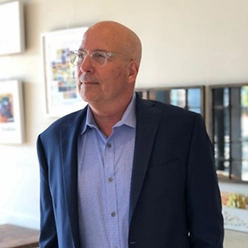
Phil Wilson (00:00)
Glenn, welcome to the Left To Boom show. It’s great to have you on.
Glenn Album (00:03)
Thank you, Phil. It’s wonderful to be here.
Phil Wilson (00:06)
Yeah, so why don’t we just quickly maybe start off, just introduce yourself real quick and kind of your background. Today we’re going to talk about supervisors and how important they are to a positive employee relations environment. So maybe give a little bit of your background for folks.
Glenn Album (00:20)
Sounds good. So my background is probably a little less typical. I actually started as a high school teacher in New York City, in an inner city. And long story that I’ll stay away from is ultimately I ended up joining a pharmaceutical company as a entry-level HR specialist and became a generalist and pretty much throughout my entire 35 year career working for premier organizations, Fortune 500, Fortune 100 companies, and ultimately became the head of HR for a fairly well-known large company.
Phil Wilson (00:59)
Yeah, great. And that’s where our paths crossed, right? So you now are consulting, on the outside, but you’ve had this incredible career working for, you know, big name brand companies dealing with human resources and dealing with a lot of, you know, supervisors of all stripes, right? You know, experienced great ones and probably less experienced bad ones. So that’s, that’s what we’re going to, talk about today, the importance of those. So let’s start with.
Glenn Album (01:02)
Yes. Yep.
Phil Wilson (01:26)
The big mistake, I’m sure you’ve seen it a thousand times and I’ve definitely seen it a lot of times in my career. The big mistake most companies make is they promote somebody into a supervisory position, especially like a first level supervisor. And it’s their first leadership experience. And they basically promote someone who is a high performer, but they’ve really done nothing to prepare them for the leadership component. Talk a little bit about sort of what have you seen?
there and what are some of the challenges of promoting somebody like that?
Glenn Album (01:57)
Yeah, I think that story unfortunately is too familiar to many of us. you know, because generally speaking, it’s that high, strong individual performer who, you know, has not learned or had the experience in managing, influencing and leading others that gets recognized for their great individual performance.
And too frequently, companies really don’t invest in their ability to transition from one to the other. So I think it often leads to problems. Some work their way through it, others don’t.
Phil Wilson (02:33)
I totally agree. And I’ve seen it so many times. One of the things that to me is the most unfortunate about that is that first level supervisor job sucks. Like that is a very difficult role because you are right in between. You’ve got management above you that is telling you how much you have to produce and your team needs to produce and the quality that it needs to be at. you know, there’s a lot of directives coming from above.
But then you’re, you’re also the first level of support, you know, to the team that’s producing. And so that like that just by itself is very challenging. Then you stack on top of that, what you just described, right? I was a high performer. I can work circles around everyone else on my team. That was how I kind of got into the role because I’m so expert at doing the job, but I got no preparation.
for managing a team or leading a team. And so really the only prism that they have is just, wow, my team is really no good at their job because I could do it so much better. so it’s just the worst possible formula for a new developing leader is to put them in that spot with no training. And their main point of view is about, I’m better than everyone here at doing this job.
and I’m stuck with this poor performing team. Tell me about what that looks like.
Glenn Album (03:57)
Yeah, you know, I think at the end of the day, when I think about my career when I was most successful, truthfully is when I really rose to those senior levels and I got a chance to listen to and engage in those more strategic conversations. So I understood kind of the why behind the what and where, you know, unfortunately supervisors find themselves in the position is companies kind of demand the what for them.
and really generally don’t spend the time talking with them about the why. So they really understand the principles and the reason behind what the given initiative is. So therefore, it becomes harder for them to really manage because they’re managing with kind of directives rather than principles. When you have principles that you understand, it enables you more latitude to kind of lead in your own.
Phil Wilson (04:47)
Mm-hmm.
I think that’s so important. And because it is their first sort of management role, I mean, first of all, companies should do a better job of just explaining that directly to everybody, right? Like what’s the why behind directives and procedures and policies that we have? having that first level leader operating in the dark puts them at an even further disadvantage, because then they end up going, well, look, this isn’t my idea, that’s…
The guys upstairs are the ones that came with this and I just am supposed to make you do it. That’s not, you are putting that supervisor in a really bad spot at that point.
Glenn Album (05:26)
Yep, agree.
Phil Wilson (05:27)
⁓ so this whole series of episodes that we’re doing is, is around the next 52 weeks. So if you assume a company has just gone through a union organizing campaign, so many times the beginning of that campaign is essentially broken first level supervision. let’s, let’s start with that point and then we’ll talk a little bit about, you know, what are the practical things you can do to kind of dig yourself out of that hole, but.
But a lot of union campaigns start, don’t they, by supervisors that just aren’t very well equipped.
Glenn Album (05:58)
Yeah, I agree. And it’s funny, Phil, it’s generally kind of the ⁓ softer engagement, just kind of being more patient and polite and speaking to people respectfully that sort of can start the spark when the supervisors don’t do that. When they’re insensitive, when they’re not connected with their people and they’re really heavy, heavy handed command and control. And it creates this
Phil Wilson (06:16)
Mm-hmm.
Glenn Album (06:24)
is this real contentious kind of relationship. And so, you know, to start with my experience is it’s really about just being, we’ll probably talk more about it later on, but it really is about kind of just everything we learned growing up. Please and thank you goes a long way. And so it’s, to me, it starts with that.
Phil Wilson (06:47)
Yeah. And of course, you know, in my parlance, that’s approachability, but that’s like, what do you do to create an environment where your team feels safe and comfortable coming to you, where they, if they’ve got a challenge, they can, they know that, that you’ll listen to them and that you’ll do what you can to try to resolve that. If they’ve got a suggestion or an idea, they know that you’re going to actually listen to it and maybe raise it up or implement it. So those, those things, a lot of times that softer stuff.
Glenn Album (06:52)
and
Phil Wilson (07:15)
A supervisor again in this position of I’m the expert and I know this job really well. A lot of times they look at that softer stuff is like a weakness and really that’s kind of the magic, right?
Glenn Album (07:27)
I couldn’t agree with you more. There’s no question that, you look, you look at even professional sports, the coach isn’t the best basketball player ⁓ in the gym, but they really do have this ability to connect and to motivate their people, et cetera.
Phil Wilson (07:42)
Yeah, yeah, it’s, really important. So let’s, let’s get into a little bit of the practicalities here. So, so let’s start off with, if you’ve just gone through a union election, you’ve, you’ve got, you have the supervisors that you have. So, so let’s talk first of all, a little bit about developing that group of supervisors. And even if you’re a company that’s never had a union election, you know, you still have this sort of base group of supervisors. What are some of the tips that you would give to
to a company that let’s just say they haven’t really invested in first level leaders. They’re not like, where would you start?
Glenn Album (08:15)
Yeah, I tell you, and I think you saw us do this at one of the companies where we worked together when I was a client. I think it really starts with kind of time at the table with the supervisors. And I’m not using the table as the union table. You know, just kind of round table conversations. And what was most effective for me…
was when we would bring the supervisors together. And I honestly was many levels above. I had an HR manager, I had an HR director, but I would go in and I’d sit in on these round table conversations, talking about what they were really experiencing and helping them kind of move through this healing and motivating connection with their people. So I love the idea of sitting in a circle with the supervisors, having them share, you know, what were your problems this week?
And how did you approach that particular problem and try to build a level of consistency between the super viruses and how they kind of approached both solving problems and really leading towards kind of the future.
Phil Wilson (09:19)
Yeah. And a lot of times that just kind of everyone being on the same page, understanding I’m not the only one that’s struggling with this. That sort of elevates, wow, this is a more of a systemic thing that we need to solve. or it’s like, this, this individual, she’s really great at these conversations that I’m not the best at. Maybe I can lean on her a little bit to, to, do a better job of that conversation. Like those, those opportunities, if you don’t kind of,
create that round table, if you will, those conversations just aren’t going to happen or they’re going to happen very, you know, usually when things are, are getting out of control or it’s just going to be happenstance. If it happens at all, you know, creating that structure, I think is really valuable. What, what about, what other kinds of things might you do to develop a team of supervisors like that?
Glenn Album (10:07)
Yeah, you know, I think first of all, and you write a lot about this, so I’m a student of yours, on this front, but I do think it’s about creating this safe space where the least confident and secure supervisors feel comfortable enough to really open up and share and talk about, you know, where they’re struggling, et cetera. So I think this idea of building trust, and I know you talk about it in the context of approachability,
But trust in the safe space for those round table conversations is really, really critical.
Phil Wilson (10:42)
I mean that behavior, right? Of having the safe space for themselves to be able to admit like, don’t really, I don’t know what I’m doing here. I’m like, I’m kind of lost. I’m not sure what to do. where there’s not, you’re not getting judged for that. Like there’s a, it’s a space where you can, you can experience share with other people. Yeah. That is teaching the behavior that you want them to then have with the folks that they’re leading, right? I need to be the kind of leader that I don’t have to have all the answers. I don’t need to.
you know, just be marching around, ordering people around. Like I want people to also be able to be vulnerable with me. And that’s going to require me to sort of meet them halfway. So those, those sorts of behaviors are the kinds of things that really separate the great leaders from those that, you know, just sort of make maybe pass. And then it’s for sure the difference maker between the successful leaders and the ones who fail.
Glenn Album (11:35)
I really agree. And when we talk about behaviors, what really jumps in my mind is really this notion of really talking about the values of the organization. And what does the company really believe in in terms of how management should carry themselves and how employees should engage with each other?
Phil Wilson (11:39)
Mm-hmm.
Yeah.
Glenn Album (11:55)
So building these set of values and really talking about those behaviors and setting up a safe enough space that if I’m not living those values in a way that I should, people should feel really comfortable calling me out because, you know, we’re human. And even though we aspire to certain behaviors, we don’t always live them. And it’s very important to be able to set up this safe space. Let’s talk about who we are as a company, what we believe in.
and how we live those values and how those values show up in our behaviors. And everybody should be free to call out when leaders are not living the values that they talk about.
Phil Wilson (12:36)
Yeah, that’s so important. I’m wondering if you can think of, you know, don’t have to name them, but can you think of, you know, an example or two of, you know, a supervisor that when you kind of, you know, they were struggling and they made like that leap to, I don’t really know what I’m doing to like, they got good at this. What were the kinds of things that happened to kind of get them on the right path?
Glenn Album (13:00)
I think you see it when they’re really showing up as their true self, right? So when you hear them expressing kind of their values, and most importantly, those values align with kind of the organization, is when you really see it. You know, if you would force me into an example, you know, and it’s really probably, I would revert back to…
the manufacturing environment that we’ve both lived in, I can see ⁓ a supervisor, and it takes time, who grew into kind of being themselves and leading confidently. And of course, closing the gap between the senior leaders in the company and kind of those frontline employees, right? So it’s never.
the supervisor coming forward and saying, and I think you said this earlier, Phil, well, we have to do this because Glenn told us this is what we have to do. Rather really showing up and really owning it and patiently explaining it is where I see the examples of that.
Phil Wilson (13:58)
Mm-hmm.
Yeah, and it’s interesting, like I’ve coached a lot of struggling supervisors over the years, and it’s interesting when that light bulb goes off of, I don’t have to have all the answers, and I don’t have to be the know-all end-all of every discussion that happens in this department, and it’s okay for me to be vulnerable. Like that.
They then can’t like, can be way more real if you are living in a space where like, that’s not just okay, but like, that’s the expectation, right? And, it requires, it definitely requires like top leadership has to also walk that talk. Like you can’t just expect everyone else to be vulnerable, but you, but it, once you sort of create that, like this is okay to have these conversations. And I would encourage you to have the same kinds of conversations with your team.
⁓ once that goes off, you, you, can see big changes. Some people are not able to make that leap. those are people that you should not continue to employ as supervisors. but if you, if, but, but you also cannot like the trap that bad, you know, companies fall into as there is, they just keep churning through, you know, supervisors because they’re not doing the work that you have to do to make sure you’re.
You’re promoting people that actually have leadership skills.
Glenn Album (15:25)
No question. And you know, I want to just touch on this idea of vulnerability because I think it’s so important for executives to be comfortable showing vulnerability because it really makes you more relatable. People can, you know, connect with you strongly. You build credibility and that you’re honest and you’re vulnerable. We had a CFO in a big company I was in and he was really the number two leader in the company. And at times he took the leadership role and
Phil Wilson (15:33)
Good.
Glenn Album (15:51)
I found myself on occasion being in a position of having to close, unfortunately, a factory, et cetera. And he said on a stage, goes, know, Glenn is our leader. He’s amazing the way he connects with people, but don’t let him stray too far from the head of finance because, you know, he’s never been good at math. He’s not good at math anymore. And it became this running joke, right? That, you know, don’t ask me to…
to do the calculation, ask me to connect with the people. And I loved it. I love being able to laugh at myself. And I think in the end, it helps me connect with people when they see that I’m open enough to make fun of myself.
Phil Wilson (16:29)
Yeah, absolutely. And I mean, that’s, that’s like I said, that’s important all the way up to the top of the organization. If you’re a business owner, listening to this and like I am, and I wrote a book about this. like, yeah, I believe me, I am not, I teach it, but I was not really leading my own company, in this same way. And, and I have made that change myself and it has transformed our organization. It’s transformed our culture.
So you can teach an old dog new tricks and you just want to make sure that you are, are creating that environment, like starting with yourself, wherever you’re, whatever level of the organization you happen to be in, you know, start with looking in the mirror and then you kind of work your way either up or down or both depending on where you’re at. But that’s, I think it’s, it’s really important there. Let’s switch gears. So you’ve got a supervisory opening and.
you’re kind of trying to figure out who should I promote into that opening. What are some experiences you have to share around how do you get out of that trap of just promoting the highest performer?
Glenn Album (17:33)
You know, I think it’s actually giving that particular supervisor, identifying them long before the opening. Let’s start with that, right? So, you know, companies that plan succession well at every level are the ones that really prepare, generally are able to prepare people so it’s not a battlefield promotion, if you will, and you just say, God, let’s go grab Jose because…
Phil Wilson (17:56)
Mm-hmm.
Glenn Album (17:59)
You know, he’s an amazing performer, but you identified Jose quite well in advance and you begin to give him opportunities to lead in their current role. So you can really see, you know, what their natural capabilities are, where they need some work. And if, you know, that person you identified really truly is committed, they have the right values, but they don’t have the skills,
you have some time to develop those skills. So I found the ones that are most successful are the ones we identify early. We sit with them, we talk with them, we let them know, we see them as somebody who can move into this role. And you have real honest conversations. So you say, hey, look, this is the place where we see some gaps. Let’s start working on these.
Phil Wilson (18:29)
Mm-hmm.
I love that. And then I would, I would add on top of that, there there’s also the, the person who’s the high performer, you know, who thinks they’re the, they’re the, they should be the next in line, right? Because they’re that high performer. It’s really important to have those same conversations with them. Right. It’s like, here’s like, I, I agree. You are the top of the class in this department, but if you want to be a leader of this department, that’s like a different skillset than doing.
the tasks, here’s some things that you could work on to get better at that. And we’re going to need to see that before we would put you in charge of leading.
Glenn Album (19:20)
Yep. And you know what’s interesting, Phil, when I think of that true superstar as the individual performer, they have been accustomed to kind of being in the spotlight, you know, catching the ball and, you know, at the end of the game and winning with their touchdown, et cetera. But what they generally comes less natural to them is humbleness, you know, helping set others up for success, putting others in front of them.
Phil Wilson (19:42)
Mm-hmm.
Glenn Album (19:47)
And that’s really the capability, I think. That’s one of the, what you want to try to teach to budding stars.
Phil Wilson (19:56)
And going back to your coaching analogy, some of the very best coaches actually were great players, right? So like you, you can all, but, but you teach from, you know, you’re, you’re able to develop people because like, you know what that job is like, and you were able to perform it at a high level. And so now when you’re coaching, instead of looking down on your team about they can’t do it as well as you could do it.
Glenn Album (20:03)
Mm-hmm.
Phil Wilson (20:24)
You see that team as you can develop them and grow them to the level that you were. So that to me is that that humble mindset shift of like I’m not the person with all the answers on the person has the opportunity to help this group learn and grow. That’s that’s a very different approach and you could actually be talking about the exact same things that you’re noticing the exact same things that you would like to see improved.
Like those conversations could be about all the same stuff, but supervisor one is just going to create a bunch of animosity and bad feelings. And supervisor number two is going to have a bunch of great development conversations and watch their team, you know, rise to the top. It’s, it’s, it’s a mindset shift way more than it is, you know, the, the actual, like what you’re seeing and what you’re doing.
Glenn Album (21:15)
I fully agree. There’s no question, right? On occasion, I’ll approach a manager who might have like 12 supervisors and I say, you have anybody you’ve identified as a successor? And that manager may say to me, I have nobody. I say, really? You have 12 people and nobody you think is…
you know, has the ability to develop. To me, that’s more of a reflection of the mindset of that manager than, because we know, right, within those 12, there are probably six of them have the potential to move to that next level.
Phil Wilson (21:47)
And it’s also like, what are you doing to fix that? Right? Yeah. Yeah. Great stuff. Great stuff. So if I’m, I’m a listener to this and I’ve, I’ve, I’ve come through either a union election or there’s like some, some other, you know, employee relations event that has, you know, triggered my interest in, you know, watching several hours of stuff on employee relations environments. What are the top?
Glenn Album (21:49)
Absolutely. Yes. Yeah. Yeah.
Phil Wilson (22:12)
you know, two or three things that you advise them to do just around the specific topic of your supervisors. What would be the next actions you would have them take to make sure that that team is growing and strong?
Glenn Album (22:25)
Yeah, it’s a great question and one that I’ve lived through. I really feel at the end of the day, and you might have heard, I think you have heard me talk about this, at the end of the election, there’s a lot of bad feeling. And the one that is most damaging is when a supervisor or manager holds a grudge against those that actually supported the union. And so I feel like one of the most important things
when the election is over is in a very visible way for that supervisor to really be very demonstrative on the floor to say, know, it’s all right, Marie, and have that Maria, I know you were really in favor of the union, but now it’s time to move on. And I feel you’re really important to the team. I respect that you believed that the union was the right thing for the organization, but now it’s time to move on.
Phil Wilson (23:08)
Mm-hmm.
Glenn Album (23:18)
and to really forgive, right? And to move forward. And I can tell you a story, Phil, of a very, very active hourly employee who really, really petitioned hard to drive that union. And when the election was over, that person came upstairs to meet with me and the CEO, right? And the CEO just happened to have been there and he walked into that room in tears.
And this was a 60-year-old man, big, and he was straight. And he goes, you I hope you forgive me. I hope that you don’t hold this against me because I love this company. And every time that CEO came back to the site, she would find him on the floor and really kind of like, you know, embrace him, not always physically, but just…
Phil Wilson (23:55)
Mm-hmm.
Mmm.
Glenn Album (24:08)
And it was so important because it was really this moment of moving on together and you need the whole team engaged and believing that in the same cause.
Phil Wilson (24:18)
The folks that are especially like the key drivers of a union campaign, they’re leaders, right? Like they’re like, they are expressing a, ⁓ I, there are things I don’t like about this workplace. There are things that I have complained about at this work. I, I know we could be so much better. And then they, they’ve, they’ve decided that the solution is a union. And so that’s why they’re promoting it. But it very, very often comes from a place.
Glenn Album (24:24)
Absolutely.
Phil Wilson (24:45)
So love might be a little strong of a word, but for some people it is like I love this place and it’s not doing the things that I know it can do and should do and like that’s where it comes from. That feeling is incredibly important to embrace post-election. Like those folks should be your most most important people that you’re talking to because they’ve already proven.
they have the energy and the leadership and that they have influence over other folks. You want them to be your cheerleader, right? So like that, what, like, what do you do to embrace them? And, and that really starts with who’s their supervisor, right? Who is, who is going to make sure that they feel just like you just described, right? And it’s great that it comes from the top of the company, but, but they’re their leader that they’re around every day. It needs to be clear. There’s no hard feelings.
You are, we are all one team here. everything that you were saying we could do better, like we could do better. And so like now we have this opportunity this year that we are going to do everything that we can to be the place that you are proud of, that you don’t feel like you need to pay somebody to represent you to accomplish the things that we feel like that we could do together.
Glenn Album (25:53)
I couldn’t agree with you more. And it goes back to the criticality of that supervisor role, because that CEO could have said and believed whatever she did. But if that supervisor is down on that floor seeking revenge, it’s all meaningless. So it really is about, again, that critical role the supervisor plays, because they have the direct interaction and influence that given employees experience.
that day.
Phil Wilson (26:22)
Yeah, we’re coming up on time, but I, I, I talk about this a lot and I’d be curious. I’d love your thoughts about this, but I, I tell people, you know, culture is not a poster on a wall. Culture is not like some video that you show on your website. Your culture operationalized is literally the relationship your frontline supervisor has with the team that, that reports to them because that
is the person that you’re around every single day and the things that you either allow or tolerate or or the behaviors that they engage in, whether those are good or bad, like that is your culture. And I’d be curious, like what are your thoughts about that?
Glenn Album (27:03)
love that. The first thing that comes to my mind is you’ve heard that added, you your actions speak so loud, I can’t hear your words, right? ⁓ I would say though, I am of the school that it starts with the words. So if you don’t really sit and have conversations about your values and your beliefs and why they’re important in really driving the success of the business, which, you know,
Phil Wilson (27:11)
Mm-hmm. Yeah.
Mm-hmm.
Glenn Album (27:30)
falls in two camps. know, one is about this idea of continuous improvement and strategy and forward thinking. And the other part of it is really about driving engagement where people really, you know, want to come to work and give, you know, they’re all. So I believe, Phil, and I’m a strong believer that it does start with the words and it starts with articulating the values because if you think about home, right, you learn from your parents about the values that
they hoped would drive certain behaviors. Then it’s really about monitoring the behaviors and really talking about, and you’re right, if anybody at any level, and particularly the supervisors, don’t really live the values, then it’s a poster on a wall. But if they do, say, that’s great. We’ve talked about the values that are important, and our leaders, our frontline leaders are living it. And by the way, so are hourly employees.
and we’re all holding each other accountable.
Phil Wilson (28:25)
Mm-hmm.
Yeah, I love that. And yeah, I hope I, you know, I’m not saying that those words aren’t important, right? Like the poster, if you’re living it is a really good reminder. The better reminder is to be able to call out, Hey, you know, today here’s like three or four examples I saw of this incredible team living out our core values. And then even getting the team calling each other out for
hey, these are ways that the core values were lived out. Yeah, that’s when it’s working. I think that’s a great place to end. Glenn, I really appreciate you. You’ve got so much experience and value around this topic of building supervisors. I really appreciated the conversation. So thanks.
Glenn Album (28:57)
Thank you
Thanks so much.
Fix Your Supervisors, Fix Everything
What if I told you your entire workplace culture lives or dies at the supervisor level? Not in the boardroom. Not in the town hall meeting. Right there on the floor, at the desk, in the breakroom. That is where culture becomes real. Or collapses.
Today, we are diving into the one topic that makes or breaks almost every labor relations situation we see on the ground—frontline supervisors. The folks who carry the culture on their shoulders usually get almost none of the training, support, or clarity they need to do it well.
In this episode, Phil Wilson sits down with longtime HR leader and consultant Glenn Album to get real about what supervisors struggle with, what they need, and why so many companies end up building cultures they never intended. Glenn has lived this stuff in manufacturing plants, corporate offices, Fortune 100 boardrooms, and right at the center of union organizing campaigns. What he lays out in this conversation is the blueprint for the next 52 weeks if you want a stronger workforce, better performance, and a culture that is more than a poster on the wall.
They cover the traps companies fall into when they promote the best individual performer instead of the best leader, how tolerated behavior quietly scripts your culture, and what it really takes to develop supervisors who know how to lead, not just manage.
If you care about team dynamics, leadership, or building the kind of culture that keeps you out of trouble and ahead of problems, this is the episode you need to watch right now.