
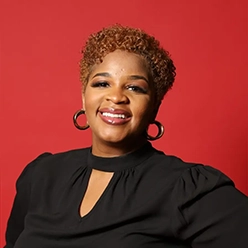
Phil Wilson (00:02)
Natalie Parker, welcome to the Left of Boom show.
Natalie Parker (00:05)
Thank you for having me, Phil. It’s great to be here.
Phil Wilson (00:08)
Yeah, I’m excited for today’s talk. We have a lot of leadership thoughts in common and I’m excited for our listeners to get a chance to get to know Natalie Parker. Why don’t you start off there to tell us a little bit about Natalie.
Natalie Parker (00:22)
Yeah, so I am the president and CEO of Natalie Parker Enterprises, where we help organizations and teams have better, healthy, mutual, accountable relationships for their purpose. I am a New Jersey native, a wife, a mom, a minister, all of the things. I’m also a podcaster of the podcast. So your boss, that’s now what, where we help employees and teammates figure out how to navigate the waves and seeds of bad leadership. And that was born out of my Ted talk, which now is about
20,000 views on YouTube where we help people figure out like, listen, if you played Russian Limp, based on the statistics, most people will have a bad boss in their life, right? Gallup talks about how, know, 85 % of people are engaged, disengaged across the globe in some kind of way, right? And, you know, they even wrote the book, It’s the Manager Stupid, right? All of these things that we know that we continue to invest in leadership development and leadership still has not gotten exponentially better for the workforce. And my
Phil Wilson (01:02)
Mm-hmm.
Mm-hmm.
Natalie Parker (01:22)
desire and intention is to help people figure out how to navigate it. It may not change. It may not ever change. We hope it does, but I expect that the post-COVID society coupled with AI, it’ll continue to compound this fracture. So how do we help people navigate and protect themselves and grow and thrive in spite of it?
Phil Wilson (01:39)
That’s crazy. You know, people are especially you just mentioned like in the environment, kind of post COVID AI, people are like, what, you know, what are, what’s the role of leaders? And I can’t really imagine time that having a good empathetic boss that will listen, that tries to understand your needs, that’s going to hold you accountable and help you grow. Like, I can’t really imagine a time that that’s been more important.
Natalie Parker (02:05)
Agreed, agreed. I believe that in the midst of uncertainty and chaos, people default to what they know rather than lean into understanding what’s happening and what is needed and necessary. And that vacuum is going to make this worse, in my opinion.
Phil Wilson (02:14)
Mm-hmm.
Yeah, that’s actually an incredible insight. know, like the leaders themselves, know, when they are, yeah, everyone is sort of like, what does all this mean? And yeah, when you’re in that mode, you sort of go to default position, which may not be the right place to start, right?
Natalie Parker (02:39)
Yeah, and if you know this by working with organizations, the organizations, the way many of them are starting to acclimate to AI is like, how do we govern it? How do we lock it down? No one does anything wrong. And that’s not a bad position because it’s their fiduciary responsibility to protect the organization from cyber risks, from warfare in terms of information. I get that.
Phil Wilson (02:48)
Mm-hmm. Yeah, right.
Natalie Parker (03:04)
And there is a mindset, an accountability mindset that leaders need to have when it comes to dealing with the technology, dealing with the people that will far more ruin an organization than the tech governance will.
Phil Wilson (03:20)
And I talk about this idea of the hero assumption, but like the assumption, you know, the assumption behind creating a bunch of guardrails and rules is that you can’t trust people. Right. And like there’s, there are, there’s a behavior then that comes from that mindset. And if, you’re, if your mindset is people are going to screw this up, people don’t know what they’re doing. people are going to use it for bad purposes. Like you’re, going to approach like the rules you’re going to write the conversations you’re going to have.
Like all of it’s going to come from this place of like, you’re a bad person that I have to like put guard rails around. And, and if you, if you flip that, we even just have been doing this here where I have, you know, even on my own team, it’s like, people are scared about what, should I use AI? How should I use it? What should I use it on? Where last quarter we just had a, one of, one of my rocks, one of my accountabilities last quarter was I sat down with everybody and was like, okay, what
What are you working on that just is frustrating and sucks about your job? And like, let’s figure out, is there a way that AI can, can help with that? And that’s a, it’s still the same thing. Like you, you still talk a little bit about, don’t you, I wouldn’t use it for this, but I trust that you can figure out a way that this thing that you’re working on, how it can, you know, it can help you. And, and those are like motivating conversations and you’re in your, you’re talking about the same stuff, but it’s just the,
the you approach it makes a huge difference.
Natalie Parker (04:47)
I agree. was giving a talk yesterday on AI and accountability, which I don’t think I ever thought I was going to find myself having those conversations, but seeing all of the AI slop and some of the headlines, like, I don’t know, the guy who was able to buy a Toyota for a dollar because he fooled the AI chat bot from Toyota or the person who got 260 nuggets from McDonald’s because they went through the drive through an AI, right? And I realized, Phil, that we have been trained to be scared.
Phil Wilson (04:54)
Mm-hmm.
Mm. Mm-hmm. Yeah.
Natalie Parker (05:17)
You never think about it, but think about the
first, the first movie that you ever got introduced to when it came to AI and computers, right? 2001 space Odyssey. No, Dave, I cannot do it. Right. Terminator, right. Where he’s just going to come and kill you from the future. Right. Then you go to iRobot where like the prime directive is like all humans have to die because y’all are unsafe. Right.
Phil Wilson (05:26)
Yeah. Mm-hmm. Mm-hmm. Yeah, right. Uh-huh.
Mm-hmm. Right?
Mm-hmm.
Natalie Parker (05:45)
And then, you know, most recently, Megan, which is just a parody and really funny, but we’ve been taught by our entertainment to fear this technology. I don’t know that that’s an inappropriate fear, but I think it’s important for us to acknowledge that it’s, you know, in the psyche of our collective society, that that’s how we’ve been approaching it. And so that’s how most people approach it, because it’s like, I don’t know if I should dress this.
Phil Wilson (05:55)
Mm-hmm.
Yeah, I don’t like iRobot’s solution, but like related to our conversation here, it’s really the humans you gotta, you know, mostly be worried about.
Natalie Parker (06:18)
And that’s, and that really is the thing. It’s about judgment. And we try to create the guardrails because we don’t help people create processes and methodologies and intent around having good judgment.
Phil Wilson (06:31)
Yeah. Well, a big part of your practice relates to accountability and we didn’t really finish the intro. So a little bit about sort of like, what was your experience before you, you you ended up in your entrepreneurial journey and, and why don’t you relate that to the work that you do around accountability and these accountability conversations.
Natalie Parker (06:53)
Absolutely.
I grew up in Lockheed Martin. I was there for 12 years. It was definitely a company that I loved and enjoyed. I came up through their leadership development program in HR and it was an interesting thing because I was a non-traditional student. Many of the people who had come had come straight out of college. I had already started. I was three years in procurement in Morristown, New Jersey and said, you know what? had gotten green belt and black belt certified. I started helping train the team.
and at the advent of a new email and phone system. So I am old enough to remember when times where we didn’t have an email, where we had to fill things out in triplicate and all of the things, right?
Phil Wilson (07:36)
Me too.
Natalie Parker (07:36)
Fast forward to 12 years later, I had gotten to a leadership position, loved my team and had a boss situation that was just really terrible, right? Where my dad was sick and I was looking for support and help and my leader was like, well, I know understand you’re genetic, but who’s going to do this work? And we talk about that in my Ted talk. I left there, went to Amtrak and was in organizational development, was able to create and deploy the performance
management process along with the OD team there, was there for two years and then got married, had my son and my husband and I moved here to the Charlotte metro area where I spent six years in forestry, which was an interesting experience, leading OD for the US. And my last corporate job was a fintech here in Charlotte. And at the end of that, it was right at the end of COVID where the organization was…
doing well up until it wasn’t because of COVID. was was a mortgage industry. And my last day there was also very interesting because they were doing layoffs. I understood that they were coming, but I was on FMLA. My leader called me with the intent to terminate me and I has like, like I know how this goes being an HR, like we have left everyone else alone. Just let me come back and we can finish this. And it proceeded for like three different, three different iterations of people
Phil Wilson (08:50)
Yeah.
Natalie Parker (09:02)
calling me trying to terminate me. I like, yeah, we’re not doing this. So I won’t go into the gory details, but that again, was like one of those like your boss sucks. Like what are we doing here folks? Like I’m about to have a major surgery like in a day or two. You’re trying to terminate me. And the one of the most stressful times of my life.
Phil Wilson (09:08)
Yeah.
Yeah.
Mm-hmm.
Natalie Parker (09:21)
And it was,
it was a layoff. was like, wasn’t for performance. had been a very well regarded, you know, person in the organization. So just give me some slack. I’m trying to recover. And that was the conversation. So when I look back and reflected, you know, that bore me into starting the company, you know, my company, which goes into organizations and assesses and tries to really bridge the gap between executive and leadership intention versus how people experience it.
Phil Wilson (09:33)
Yeah.
Natalie Parker (09:51)
and bridging and translating and creating programs, processes and systems that support that. And I leaned into that as I continued to reflect of like, there are people in leadership who’ve never had, never had experiences, never had training, never had intention, never figured out their own values. And started talking to more and more people and said, I’ve got to start this podcast to help people really navigate this idea of leaders, you know, not sucking the life out of them.
Phil Wilson (09:51)
Mm-hmm.
Natalie Parker (10:21)
More so because you spend so much time at work. Many of us have careers and jobs we love. Some of us don’t, some of us work because we have to, Whatever continuum you’re on, whether you’re, know, flipping fries at McDonald’s or you’re in some corporate office or they’re, you know, thumb wrestling about work from home, right? Whatever it is, having a leader that sucks makes life miserable.
Phil Wilson (10:31)
Mm-hmm.
Mm-hmm.
Natalie Parker (10:46)
And for me, I wanted to take the learning that I have, the insight that I have and share it with people so that they don’t have to be victims, even if the organization has not been able to course correct some of the leadership indiscretions, I’ll say.
Phil Wilson (11:05)
Yeah. And the flip side is also true, right? We’ve, we’ve had this experience. You probably, I’m sure you have to where, you know, there’s, look, there’s times that like bad stuff is happening all around in a company and like, and we have to lay people off. have like, there, there are, there are times where things are just like not good, but if your boss and you have a strong relationship and can talk through what’s happening and even sometimes that’s like a bad answer.
But but that makes all the difference in the world and you can leave a company even I got laid off like the business took a downturn but still love that company want to go back and work for that company want to work for that boss wherever they end up like that like that is completely in control of the leader irrespective of what’s happening organizational.
Natalie Parker (11:44)
Yeah.
Absolutely. When I left Lockheed Martin, it was because I wanted to get more experience and breadth and depth in organizational development. I had been in the business partner space. I had been in learning and development. I’d been in a lot of the different functions in HR.
I went and talked to my director, guy named Chris Midgeley, shout out to him. He’s an amazing guy. And I said, Midge, like, listen, I don’t want to be an HR business partner anymore. I don’t want to be a manager of business partners. I don’t be director of business partners. I want to do the process and system stuff that help the organization. And he’s like, hell, we don’t have it. And I said, OK, well, then I got to go. And it was there was no hard feelings. He understood. I understood. You know, was I disappointed? Yes. Was he disappointed? Probably.
I’d have to ask him, but it was, it was, we had enough respect and trust in each other that we were able to have that conversation clearly. And I was able to make a decision for myself, right? That for me, it’s really making sure that people understand how to advocate for themselves, even if their leader isn’t skilled enough to do so.
Phil Wilson (12:59)
Mm-hmm.
Yeah, I’d encourage you to have that conversation with him. I’m curious, you know, what his version of that would be, because a lot of times, I mean, I’ve had that conversation, you know, with with team members of mine over the years where it’s like, believe in you. You’re awesome. Like, I love what you’re doing here. But like, but the thing you want to do, we just don’t have here. And like, I’m and I will be sad when you go. But like, the best thing for you is to grow.
where you can grow and right now at this time, like it’s not here. That’s what I’m not saying that I’m like the greatest leader, but that’s what great leaders do, right? They want what’s best for you and they want to see you learn and grow even if that’s not maybe in their personal best interest.
Natalie Parker (14:04)
It’s a mature space that a lot of both leaders and companies don’t intentionally offer at times. I was reviewing a policy for a company and one of the policies was talking about how if a person had to have additional employment outside of the company that they had to disclose it.
Phil Wilson (14:11)
Mm-hmm.
Mm-hmm.
Natalie Parker (14:28)
My question was, well, what’s the intention here? Well, we don’t want a conflict of interest. I said, well, then have a conflict of interest policy. But what they do after work is their business. And there was some pushback. And I said, most people who have to do extra work because you can’t pay them enough or the job doesn’t require it are women, minorities, people who are underserved populations. You’re asking them to put themselves at risk, and the leader can then make it about their other job. Have a policy about time. Have a policy about conflict of interest.
Phil Wilson (14:37)
Mmm.
Natalie Parker (14:58)
Because many times organizations act like the bad boyfriend when it comes to employment. You can’t see anybody else than me. I just want you to myself. Even if you’ve outgrown the role, you can’t leave. And if you leave, I’m going to be mad at you. That’s not helpful. And that’s not mature. it doesn’t, the statistics don’t bear it out, The Bureau of Labor Statistics, at least the last time I checked, said that most people leave a company every 3.8 years.
Phil Wilson (15:04)
Mm-hmm.
Natalie Parker (15:23)
So why don’t we expect it? Why don’t we set up our systems to expect it? Why don’t we set up the people to expect it? We hope for longevity, but if we don’t get it, we should welcome people with open arms and say, we don’t have that for you, but go and we’d love to have you come back when you can.
Phil Wilson (15:38)
Yeah. And that person working on their side hustle is going to be more excited, more engaged, learning. They’re going to be bringing things back to their day job that they’re learning outside. I love that. you’re right. If the reason they’re doing it is because the current job doesn’t pay enough to make ends meet or that’s a whole other layer of
challenge, like, you don’t manage, you know, don’t manage the exception by just like taking the entire game off the field. Manage the exception for the, the, like you said, the key, what is the key thing you’re trying to deal with? That’s, that’s great advice. So let’s, I want to get practical. You teach a lot about sort of leadership conversations and, know, to me, that’s the, talked before we started recording, but the, like, like you’re,
the customer service that the leader is providing, Is that leadership and those are basically conversations. So talk to me a little bit about what are the kinds of things that you train leaders to do to have high quality conversations with their teams?
Natalie Parker (16:49)
I believe leadership is a product. The company gets the by-product, but the consumer of the leadership is the employee. And if we have that lens, then we would treat the leadership equation a bit differently. We would respect the fact that the position power is there to get things done, but not to overburden people with fear and loathing. We would also invite employees to understand the expectations of the leader so that they could create mutual accountability for what the leader is accountable for, whether that’s to help them develop, grow, whatever.
Phil Wilson (16:55)
Mm-hmm.
Natalie Parker (17:20)
The way that I try to impact that in an organization is through accountability. If you asked 100 people in the room from the same organization to define accountability, most of them don’t have the same answer. My definition of accountability is a reconciliation of your words and actions over time.
The base word in accountability is accounting. If you’ve ever balanced your books, right, a balance to check book, shout out for those who still have them, right? But you’re looking at the, you know, what has come in versus what goes out and it needs to balance out. The balance doesn’t matter. Even if it’s negative, you’re just trying to make an account of what happened. Additionally, people need the ability to do the thing you’ve asked them to do.
Phil Wilson (17:56)
Mm-hmm.
Mm-hmm.
Natalie Parker (18:07)
And so our process is around, you know, if you say, hey, Natalie, I need you to go to grocery store. You’ve just given me an accountability, right? The accountability you’ve given me is to go to the grocery store, but we have not yet defined success. One of the biggest areas where accountabilities fail is because we don’t frame what success looks like before we say, here’s what I’m asking you to do. You give me the accountability, then, Phil, I have to take it. I have to accept accountability.
Phil Wilson (18:27)
Mm-hmm.
Natalie Parker (18:34)
A lot of times people will say yes, but they will they will mean no. And so I have to accept I don’t have to agree with what you’re asking me to do. We can have a violent disagreement, but I can accept that this is what you asked for. I’m going to do it to the best of my ability. Once you give it in a way that I understand what success looks like and then I take it, we both then have to keep account throughout the process.
Phil Wilson (18:40)
Yeah.
Mm-hmm.
Natalie Parker (18:58)
a lot of failure happens when a leader lobs the accountability over the fence and then comes back and says, what happened? Well, we should have been mutually accountable for keeping each other abreast. You should not have come running to find me because you can’t find me and know what’s going on. And I shouldn’t have to go looking for you if you’ve given me and delegated your authority to me to get this done. So if you give it …
Phil Wilson (19:03)
Mm-hmm.
Yeah.
Natalie Parker (19:22)
I take it, we keep it in the middle, then we both have it at the end to say, we’ve now had this outcome. The outcome can be positive or negative, but it’s, we both agree how we got there because we’ve never taken our finger off the pulse.
Phil Wilson (19:34)
Mm-hmm.
Yeah.
Natalie Parker (19:37)
This is important because this keeps people with tasks and projects not feeling emotionally charged about potential negative outcomes. Accountability should not be this charged world where we’re all looking for who’s going to get shot if it goes wrong. That for me is the core of it. And then you then you have to evaluate, the people have the ability to do what you ask them to do?
Phil Wilson (19:52)
huh.
Mm-hmm
Natalie Parker (20:00)
in a lot of entrepreneurship situations or even as companies are having to contract because of AI or certain socioeconomic things that are going on, we tend to tap on whosoever can, not whosoever should. And in doing that, we don’t give people the grace, the space, the leeway, and the support they need to learn a skill that’s new to them.
Phil Wilson (20:13)
Mm-hmm.
Natalie Parker (20:22)
And so the ability part of capacity, knowledge, skill, support from you, all of that’s necessary for account ability to work. And so people have to be account able and helping with a framework. That’s literally what I call paint by number, because I believe we’re in that age where we have to paint by number and come alongside people to help them build up a muscle. There’s nothing wrong with that. The same way you go to the gym and have a trainer because you don’t know the same way you might go to an
Phil Wilson (20:34)
Yeah.
Natalie Parker (20:52)
or even watch YouTube to find out things that you don’t know. Someone has to come alongside of you. And I believe especially because of the skills gap we’re seeing and how we have so many new entrants into the workforce unemployed, we’re gonna have to have a lot more leaders be really firm in their ability to create accountability, but also to come alongside people so that they can execute appropriately.
Phil Wilson (21:18)
Yeah, that’s great. I love that framing. think, you a lot of times people think about accountability and they think about it as like, it’s micromanaging people. It’s, you know, very like task focused and did you do X, did you do Y, did you do Z? And I think, you know, the thing that leaders, and I think especially now, the thing that leaders have to, again, it’s this mindset, right? Like the point.
of ability and you really have to as a leader, you talked about like this power position. A big thing we talk about is like power distance, but you know, a lot of people are scared of, especially when it comes to like, okay, I’m agreeing to like this thing I have to do and my boss is assigning it to me and they’re scared to say, I don’t know how to do that. So a lot of people will, you know, say yes and just hope you don’t follow up.
Right. So, you know, or, you know, but, but creating that space where, you’re having the conversation upfront, okay, this, I think you can do this. This is something that’s really important. Here’s why this is, this is why I’m counting on you to do it. So let’s make sure, do we understand what it is that I’m asking you to do? Do you, are you able to do that? Do you, you know, do you, do we agree back to your point? Right. Do we have an agreement that you’re able to do it?
And then here’s, here’s the process we’re going to go through to make sure I’m going to, I’m going to check in from time to time, not because I don’t trust you, but I just, I, I, may have made a mistake when I assigned it. Like I, like I need to be accountable for my part of this. So, so I’m going to check in from time to time and make sure, okay, are you on track or not on track? If you’re not on track, like what’s, what’s, what’s getting in the way? This isn’t like you’re a problem that you might not be on track because you don’t have enough time.
to do what we both agreed you should be spending time doing that could very well be my fault. Like, so we need to block out the time for you to do it. Or you may need a little extra help or some training or whatever, but like that having the ongoing conversation and having it done in a way that is uplifting is motivating is helping us together, get to the end zone that we’ve agreed we want to get to. Like there’s so many opportunities for that to be a positive interaction. And,
a poorly trained leader just like misses all of that.
Natalie Parker (23:46)
Yeah. I think part of what I see is that a lot of our management practices are still coming from the Ford Deming model of like widgets and things where knowledge work completely blows that framework out of the water. I’m often fascinated by how many leaders don’t know what their team is doing. As a leader,
You don’t necessarily have to account for every hour unless the people work in federal contracts, which you need to, but you should be able to understand how people are using their time, how much time do they have. And that’s a conversation that if you set it up in a trusting relationship, it’s an opportunity for you to evaluate both what can be done and how can people be developed, the balance and trade of that.
And I believe when you create mutual accountability and give permission to people to be a part of that, then they can say, Hey, Phil, I’ve got a little bit more time on my plate. Is there anything I can help you with? Or, you know, Hey, listen, you’re giving me this and I’ve got, you know, 80 hours already in a week. What am I doing? I will say that. Yeah.
Phil Wilson (24:49)
Yes.
And hey, someone else that I know is high potential and they would kill this. Like we should
talk to them. Yeah. I love this. So you also have this acts of leadership framework that applies outside of work leadership as well. like talk to me a little bit about how does that apply to how you grow leaders?
Natalie Parker (25:25)
Yeah, about, it’s probably been about 15 years ago, I started a company called Five Towns Consulting. was my first entree into entrepreneurship, and I could actually say it’s probably an abject failure. I learned time, so I didn’t lose anything, but it was really around helping.
churches and nonprofits, faith based nonprofits, learns a lot of the foundational things I learned in corporate America in a biblical context. Right. And so I won’t, you know, I won’t proselytize or evangelize on your show in as much as I believe that in many faiths, there are foundational elements that are very much like business, very much like leadership. And so the acts of leadership is really around helping people understand the shifts that are happening in our
Phil Wilson (25:51)
Hmm.
Mm-hmm.
Natalie Parker (26:14)
world right now and how leaders in those environments can show up authentically, can create commitment amongst their community, create trust and be of service to the community because a lot of power dynamics often taint the relationships. A lot of mistrust taints those relationships and keeping those leaders in a mind of service to the community to be able to produce the results that they want. It’s a balance in trade and I think it’s even
Phil Wilson (26:19)
Mm.
Natalie Parker (26:44)
in these environments because a lot of them are volunteer. And so being able to create that accountability to invite people to be authentic, it’s hard, but it’s necessarily especially now in this day and age.
Phil Wilson (26:49)
Mm-hmm. Yeah.
Yeah, I mean, you can learn a lot as a leader by leading volunteers. Because they don’t have to show up, right? So there’s a different dynamic and there’s a lot more you need to do and provide. Some people will show up no matter what, but a lot of people, they’re gonna lose steam if you don’t give them a reason to want to be there. so that’s a different challenge than I.
need this paycheck whether I like it or not.
Natalie Parker (27:30)
It really is. And when people participate in things external to work, many of them, especially in generations younger than mine, are looking for consummate meaning. They’re looking for purpose. They’re looking for ways to show that they’re doing what I call good work.
Phil Wilson (27:43)
Mm-hmm.
Natalie Parker (27:48)
In many organizations, especially in business, we find the work to be transactional. Go fill out the score. What for? I don’t know. Just fill it out. We all can point to some level of busy work where we have spent our life force, which is our time. And we’ve done this thing and we never know what the personal return on investment, how did I impact the organization? How did I create Morar? Why? How did I help the consumer? We don’t know. We never see it. That for me is a huge gap.
Phil Wilson (27:55)
Mm-hmm. Yeah. Mm-hmm.
Natalie Parker (28:18)
work, like meaningful good work isn’t just, you know, activity plus efforts equals results.
It’s really the kind of activity that expands you emotionally, spiritually, mentally, right? And then the results it produces is something that actually benefits someone else and you can see it. If you think about a tree, a tree has deep roots, the roots you can’t see, they’re growing underneath, it anchors the tree. It’s meaning, its purpose, its values. And it produces fruit, not for the tree, but for the environment around it. And so I believe that many
Phil Wilson (28:33)
Mm-hmm.
Mm-hmm.
Mm-hmm.
Natalie Parker (28:56)
organizations would do well and would be well served both faith-based and in the marketplace to help people understand not only the why but the meaning like what what is this one job you’re doing right now going to help the company and ultimately the people we’re serving so that they can do it with purpose, fervor and enjoy.
Phil Wilson (29:19)
Yeah. Well, to circle back to where we began, right? If the leader, if the leader sees that they’re like what they’re producing, right? The product of their leadership is just the did all the forms get filled out correctly? You know, they’re going to lead in one way. If they, if they look at the product that they’re producing is the connection and the growth and like how their team feels.
You know, they’re going to behave and do different things that is going to produce all kinds of forms getting filled out too. But like if you’re if that’s what you’re focusing on as your product, you are going to do a much better job. And by the way, you’re going to have a way better day at work as the leader. If that if you focus on that, your product.
Natalie Parker (30:09)
Absolutely. I would add to that, that one of the challenges is our collective diminishing in attention, along with a, I think a culture of what I would consider performative work, right? I coach a lot of leaders and they’re all like, I don’t have time, all the emails, all the meetings. All right, well.
Phil Wilson (30:22)
Mm-hmm.
Natalie Parker (30:35)
Sir, you’re the chief finance officer. You can, you know, alt control delete your calendar. What? can’t, yes. I mean, aside from the board meeting and the CEO, everyone else is underneath you. Make them give you a business case for why your time is required in this meeting.
Phil Wilson (30:42)
Right.
Mm-hmm.
Mm-hmm.
Natalie Parker (30:55)
When it comes to email, everyone go automate your inboxes, go do the things, make people create meaning so that you’re not inundated by the noise because it’s noise. We’ve got to stop operating in the emergency and a tactical. And I believe a lot of corporations have done this thing. You talk about the hero complex, right? We reward the firefighter, but we really don’t get happy of the guy who’s just, you know, doing, just rowing and doing the cadence and not creating chaos, right?
Phil Wilson (31:06)
Mm-hmm.
Mm-hmm.
Natalie Parker (31:25)
A lot of leaders need more time in the operational and the strategic to create the impact in the meeting, but we reward the tactical and emergency and so we keep living in fire.
Phil Wilson (31:37)
Yeah. Well, and related to the control, I’ll delete on your calendar. Like you can also book the stuff that’s important, right? You know, like that, like that’s if you’re being intentional about like connecting with my team’s important, I need to book, you know, one-on-one time. I need to book time to talk about accountability and to talk about, you know, like if you’re, if you’re intentional about that part of your time, yeah, all the other stuff is going to happen and you’ll have spots where you’re going to have to pay attention to it. But like you’ve not
programmed your life so that like that’s the only thing that you get to and that makes all the difference.
Natalie Parker (32:14)
Yeah, Phil, I’d be interested to hear from you in your life, in your experience, in the walks of life that you’ve been through. Do you typically encounter leaders who have taken the time to intentionally define the kind of leader they want to be?
Phil Wilson (32:32)
No, I mean, we’ve we talked about it before we recorded, right? But like most leaders don’t get any training or development on they don’t know how to think about being a leader or what kind of a leader that they want to be or what their own sort of talents and their own what what what they are strong at, what they are weak at, you know, all all the things that it takes to really grow and develop as a leader.
You know, most leaders don’t take the time to do that. And I told you, like in my book, I’m like, I am a poster child of that and my own company. So you really have to spend that time and, and think about, okay, how am I impacting the people that are around me every day? And is that impact? I’m causing ripples no matter what. Like I’m either, I’m, I’m, I’m having an impact, you know, but is that impact a positive impact or a negative impact?
And then, and then, you know, we mentioned this too, but it’s like, the easiest way to figure that out is go ask the people that you’re leading. How am I doing? What should I stop doing? What do I not do enough? Like these are very simple conversations that have massive positive impact.
Natalie Parker (33:51)
And that right there, I think is a really great place to really just codify. For the leader who has self-awareness, and by the way, if you haven’t read it, there’s an HBR article, Harvard Business Review article, this says only 7 % of people have self-awareness. Then you invite the people in. But for the leaders who don’t have that, and perhaps some of your audience may have leaders who are not,
Phil Wilson (34:06)
Mm-hmm.
Natalie Parker (34:18)
helping create that for the leaders also an opportunity. Where I found myself in positions like, okay, well, you know what? I’m not gonna be on this hamster wheel with you. Every week I’m giving you a report what’s happening. And I’m bullet pointing, I’m like, what I need from you so that you are not unaware and I’m not unaware and you can’t tell me I didn’t tell you. So that you create those boundaries for yourself. I think it’s both a push and a pull. And when done that way, it’s way more functional.
Phil Wilson (34:22)
Mm-hmm.
Mm.
Yeah. Well, we’re like past time and I could talk to you for another hour. I am positive. But what I what I what I’d really like to do is let’s just sort of sum up maybe give us I really love sort of practical tips. What is one or two of your just kind of your favorite tips or tips that are the most impactful that you’ve had with leaders that that you’ve dealt with and developed over your career.
Natalie Parker (35:17)
Hmm. I do a lot of coaching and I would say that intention is one of the biggest exponential game changers of a leadership equation.
Phil Wilson (35:21)
Mm-hmm.
Natalie Parker (35:32)
If you’re a if you are a leader and you haven’t taken the time to define your legacy, when you think about, you you’re turning in your badge, they’re turning out the lights behind you, your office is cleaned out, what do you want people to say about you? What do you want people to feel about you? They’re never gonna remember the work.
They’re going to remember you and how you made them feel and how you supported their lives and the milestones. Some of the best relationships I’ve had from leaders that were at graduations and baby showers and this line of like, it’s work and I need to have this professional distance. Maybe that’s true. Maybe that’s what you need. But consider the fact that you are making one of the biggest impacts on someone’s life, not by their paycheck, but by their experience and define what you want them to feel. How do you want them to
experience you and do your best at living that out.
Phil Wilson (36:27)
That’s great. Yeah, you’ve used the word intention a number of times, but like that is a great way to sort of frame. If you’ve done that there, a lot of the rest of the stuff falls into place, right? Yeah. Well, I think that’s a great place to end. Natalie, really, really great to get a chance to meet you and to learn a little bit about what you’re doing. How can people tell people where to find the podcast?
How can people connect with you?
Natalie Parker (36:59)
Well, I’d love to have you guys connect with me on LinkedIn. I’m there, Natalie Renee Parker. Also, my website is then Natalie Parker.com. The podcast is so your boss sucks. Now what? And it’s on everything. Apple, we’re listened to in 55 different countries. So it’s on Apple, it’s on Spotify, it’s on all of the things. And that website for the podcast is yourbosssucks.com.
Phil Wilson (37:21)
Great. Well, it was a pleasure to get a chance to spend some time with you. Thanks so much for joining us on the show.
Natalie Parker (37:26)
Thanks for having me.
In this episode of the Left of Boom Show, Natalie Parker shares insights on leadership, accountability, navigating AI in organizations, and creating meaningful work environments. She discusses practical tips for leaders to foster trust purpose, and high-quality conversations with their teams.
“Mutual accountability fosters trust and high performance.” — Natalie Parker
[0.00] Introduction to Natalie Parker
[3.04] Navigating Leadership Challenges in a Post-COVID World
[5.55] The Importance of Accountability in Leadership
[9.02] Personal Experiences Shaping Leadership Philosophy
[12.00] Creating Healthy Work Environments
[14.58] The Role of Intentionality in Leadership
[18.02] Defining Success and Accountability
[20.52] Building Mutual Accountability
[24.12] Acts of Leadership Beyond the Workplace
[26.59] The Impact of Meaningful Work
[30.09] Final Thoughts on Leadership and Legacy