

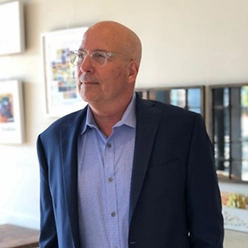
Phil Wilson:
Glenn Album, welcome back to the Left of Boom Show. It’s great to see you. We talked about supervisors the last time that we were together. Today we’re going to talk about creating a net promoter culture, which is basically a culture where people feel engaged, promote the organization, and feel like they’re working at an extraordinary workplace. That’s kind of the way we like to talk about it. So tell me.
Glenn Album:
Great to be here. Thank you, Phil.
Phil Wilson:
First, what is being a net promoter culture and creating that kind of culture? What does that mean to you? You’ve got a lot of experience in different kinds of high-performing cultures. What are some of the things that you think the best cultures share?
Glenn Album:
I think the avenue to get to the culture you’re looking for can vary. But at the end of the day, organizations are trying to drive employee engagement and satisfaction, which we know ties tightly to performance of the organization. There are benefits that go beyond that when you talk about union avoidance and similar issues.
As a starting point, it’s really about building advocacy inside the organization.
Phil Wilson:
When you say advocacy, explain that a little. I’m an engaged, satisfied employee. What does advocacy mean?
Glenn Album:
It’s somebody who feels proud of where they’re working, defends the organization, and is outspoken about why they like working there.
Phil Wilson:
I like to think about it like a sports team. You can disagree with a play that was called or feel like someone isn’t performing as hard as they should. That doesn’t turn into “I don’t like this team.” It turns into “this is a great place to work.”
You can still hold people accountable, but when the answer to everything becomes “this place sucks” or “the problem is those jokers upstairs,” that’s when culture really falls apart.
Glenn Album:
I completely agree. You want a culture where people can attack opportunities constructively. At the end of the day, they want the company to be a great place, so they are comfortable speaking out while still advocating for it.
Phil Wilson:
One of our core values is healthy conflict. We encourage disagreement. If you don’t agree with something, you’re expected to say it and challenge it. The flip side is trust. Those challenges aren’t personal and they aren’t saying the organization is bad.
At the end of the discussion, we align and move forward together. Being able to challenge each other is a key part of a healthy culture.
Glenn Album:
Sometimes people walk out of meetings and complain afterward. I love when someone says, “Why didn’t you say that in the meeting so we could talk about it?” That underground dissatisfaction can be very destructive.
Phil Wilson:
Agreed. Saying one thing and doing another is a low-integrity move. Integrity is our top core value. That’s a moment where you say, “That’s not how we do things here.”
So in the high-performing cultures you’ve been part of, what have you seen work to create a net promoter culture?
Glenn Album:
It starts with having a finger on the pulse. I like surveys, especially pulse surveys. I dislike long surveys. Anything beyond 15 to 20 questions is too much.
The power is not the survey itself. It’s the debrief. You might score a six out of ten. Someone will say they don’t feel that way. Fine. Let’s talk about why we got a six and what we can do to move it.
Phil Wilson:
Surveys have a place, but the magic is what you do with the feedback. Net promoter is powerful because it’s one simple question. Based on your recent experience, how likely are you to recommend this as a good place to work?
That gives you a pulse and a starting point for a conversation. I like asking, “Why aren’t we an eight?” or “What would it take to get from a nine to a ten?”
Glenn Album:
Exactly. It’s about committing to something that moves the organization forward.
Phil Wilson:
You don’t need fancy tools. You can do this in a room with a piece of paper. That conversation is where the value is.
Glenn Album:
I’ve seen leaders get defensive and attack their teams over survey results. That guarantees the next score won’t be honest.
Phil Wilson:
Right. They’re blaming the people they lead.
Beyond surveys, what else helps build engagement?
Glenn Album:
Culture should be purposeful and fit for purpose. A defense contractor culture may look different from a cookie company. You need to define the behaviors that drive performance and engagement. That conversation starts at the top but must move through the entire organization.
Phil Wilson:
We talk about three motivators. Power or control. Achievement or recognition. Affiliation. Pride and belonging matter. What have you seen work?
Glenn Album:
Pride is huge. When people feel proud, they defend the organization and push for continuous improvement.
Phil Wilson:
What about recognition?
Glenn Album:
Companies sometimes over-index on metrics. I focus more on the how, not just the what. Simple reward systems work best. In manufacturing plants, you know you got it right when people stand up and applaud.
Phil Wilson:
Peer recognition is powerful. We do core value shout-outs every week. Recognizing organizational citizenship behavior creates a positive flywheel.
Glenn Album:
Nothing feels better than being recognized by a peer.
Phil Wilson:
Another motivator is control. Getting people involved in projects matters. Where have you seen that work?
Glenn Album:
I’ll give you a real example. At a food company, metal filings were showing up in product. The product never reached the market because of safety controls, but experts couldn’t figure out the source.
We put a group together. The breakthrough came from a cleaning employee who noticed filings coming from the base of a railing we were all leaning on. If we hadn’t set up that team, we never would have found it.
Phil Wilson:
That’s like the maintenance person saying, “You mean these filings I sweep up every night?”
Glenn Album:
Exactly. We were literally standing on the problem.
Phil Wilson:
The lesson is making space for ideas from people closest to the work.
Glenn Album:
Agreed.
Phil Wilson:
After an election, the work really begins. What should leaders do first?
Glenn Album:
Be consistent. Start now, not when there’s a campaign. Build cross-functional teams. Keep communication strong. After elections, employees often feel disappointed. You have to re-earn trust through honest, ongoing dialogue.
Phil Wilson:
Simple questions matter. What should we keep doing, stop doing, and start doing?
Glenn Album:
Those conversations are incredibly powerful, especially when supervisors are present and listening.
Phil Wilson:
Pro tip. Have employees rate you as a supervisor. That takes courage, but it builds engagement.
Glenn Album:
And say thank you for the feedback, even when it’s hard to hear.
Phil Wilson:
Any final advice?
Glenn Album:
Be inclusive. Don’t rely on just a few trusted voices. Spread participation across the organization so advocacy is broad, not concentrated.
Phil Wilson:
That’s a great place to end. Thanks for joining us, Glenn.
Glenn Album:
Thank you. Appreciate it.
In this episode of The Left of Boom Show, Phil Wilson and Glenn Album explore what it takes to build a net promoter culture, one where employees actively advocate for the organization, challenge it constructively, and help solve real problems.
Rather than focusing on slogans or programs, the conversation centers on trust, inclusion, and everyday leadership behaviors that invite employees into ownership. A story from Glenn’s manufacturing experience illustrates the point. A complex operational issue was ultimately solved not by outside experts, but by a frontline employee who felt empowered to speak up.
The takeaway is straightforward and uncomfortable for some leaders. Cultures strengthen when organizations treat employees as partners in problem-solving rather than as passive recipients of decisions. When that happens, advocacy follows.
Key Takeaways
Chapters
00:00 Creating a Net Promoter Culture
01:06 Activating Employees as Advocates Through Trust and Inclusion